IS USING AI CHEATING?
Exploring Ethics, Integrity, and AI for School and Work An "AI Essentials" Webinar with Crystal Trice
OVERVIEW:
Is using AI cheating? It’s a question that sparks debate in classrooms, workplaces, and even in our own minds. This engaging one-hour webinar doesn’t dive into how AI works—we’ll be digging into something even more complex: how we, as humans, interact with it.
Together, we’ll explore what happens when students use AI to write papers, when colleagues rely on it to brainstorm or summarize, and when we ourselves turn to it for shortcuts or inspiration. The lines between innovation and dishonesty aren’t always clear—and that’s what makes this conversation so important.
Expect a thoughtful, nuanced discussion filled with real-world examples, big questions, and space to reflect. Whether you're working with students, supporting patrons, or navigating your own professional use of AI, this session will help you engage with these emerging ethical dilemmas with curiosity, clarity, and confidence.
LEARNING AGENDA:
Is This Cheating? Maybe. Maybe Not. Challenge traditional definitions of cheating and explore how AI is changing the conversation about authorship and originality.
Teaching and Modeling Integrity. Learn how to support students, patrons, and peers in using AI ethically—with transparency, intention, and responsibility
It Depends: Navigating the Gray Areas. Work through real examples where AI use isn’t clearly right or wrong, and explore ways to guide others through that ambiguity.
Starting Conversations, Not Just Rules. Gain tools to facilitate respectful, reflective discussions about AI that invite multiple perspectives and build trust.
This 60-minute online webinar is part of our "AI Essentials" Series. The recording and presentation slides will be available to all who register.
DATE:May 23, 2:00 pm to 3:00 pm US - Eastern Time
COST:
$49/person - includes live attendance and any-time access to the recording and the presentation slides and receiving a participation certificate. To arrange group discounts (see below), to submit a purchase order, or for any registration difficulties or questions, email admin@library20.com.
TO REGISTER:
Click HERE to register and pay. You can pay by credit card. You will receive an email within a day with information on how to attend the webinar live and how you can access the permanent webinar recording. If you are paying for someone else to attend, you'll be prompted to send an email to admin@library20.com with the name and email address of the actual attendee.
If you need to be invoiced or pay by check, if you have any trouble registering for a webinar, or if you have any questions, please email admin@library20.com.
NOTE: please check your spam folder if you don't receive your confirmation email within a day.
Multiple individual log-ins and access from the same organization paid together: $45 each for 3+ registrations, $40 each for 5+ registrations. Unlimited and non-expiring access for those log-ins.
The ability to show the webinar (live or recorded) to a group located in the same physical location or in the same virtual meeting from one log-in: $149.
Large-scale institutional access for viewing with individual login capability: $249 (hosted either at Learning Revolution or in Niche Academy). Unlimited and non-expiring access for those log-ins.
ALL-ACCESS PASSES: This webinar is not a part of the Safe Library or Learning Revolution All-Access programs.
CRYSTAL TRICE
With over two decades of experience in libraries and education, Crystal Trice is passionate about helping people work together more effectively in transformative, but practical ways. As founder of Scissors & Glue, LLC, Crystal partners with libraries and schools to bring positive changes through interactive training and hands-on workshops. She is a Certified Scrum Master and has completed a Masters Degree in Library & Information Science, and a Bachelor’s Degree in Elementary Education and Psychology. She is a frequent national presenter on topics ranging from project management to conflict resolution to artificial intelligence. She currently resides near Portland, Oregon, with her extraordinary husband, fuzzy cows, goofy geese, and noisy chickens. Crystal enjoys fine-tip Sharpies, multi-colored Flair pens, blue painters tape, and as many sticky notes as she can get her hands on.
Panic Alarm Policies:
Best Approaches for Staff Training and Safe Use Part of the Library 2.0 Service, Safety, and Security Series with Dr. Steve Albrecht
OVERVIEW:
While some libraries have a panic button-use process, policy, and response that really works, and some have a system in place that "sort of" works, for many others getting emergency help at the press of a panic button is an issue that is still being discussed and should be actively discussed. Understanding why and how panic buttons function, and more importantly, what happens when the button is pushed, often needs some improvements and should be part of a careful review.
Some libraries are in a “wait and see” mode for panic alarms, often waiting for the “Big Event” to give them the momentum, motivation, and reason to spend the money on a panic alarm system. This is a wrong approach, because it puts staff, patrons, and the facility at unnecessary risk of harm and may create liability because the library is not following current best practices regarding security devices and procedures.
This webinar discusses a total-facility approach to the use of panic buttons, to go along with existing staff techniques and supervisors’ responses in patron de-escalation and high-stress communications. The session will include a Sample Panic Button Policy handout to accompany the training slides.
LEARNING AGENDA:
How and where to install panic buttons in your library, especially to prevent accidental use or false alarms.
Decisions on the various types of responses to panic button activations, including: the first response by the library supervisors; library security officers; using an alarm company monitoring service; or calling the police.
How to create and enforce an effective staff-use policy for library panic buttons.
How and when to provide refresher training to all staff, and especially to help new-hires feel more confident about using panic buttons.
DATE: Thursday, May 15th, 2025, 2:00 - 3:00 pm US - Eastern Time
COST:
$99/person - includes live attendance and any-time access to the recording and the presentation slides and receiving a participation certificate.
To arrange group discounts (see below), to submit a purchase order, or for any registration difficulties or questions, email admin@library20.com.
TO REGISTER:
Click HERE to register and pay. You can pay by credit card. You will receive an email within a day with information on how to attend the webinar live and how you can access the permanent webinar recording. If you are paying for someone else to attend, you'll be prompted to send an email to admin@library20.com with the name and email address of the actual attendee.
If you need to be invoiced or pay by check, if you have any trouble registering for a webinar, or if you have any questions, please email admin@library20.com.
NOTE: Please check your spam folder if you don't receive your confirmation email within a day.
Multiple individual log-ins and access from the same organization paid together: $75 each for 3+ registrations, $65 each for 5+ registrations. Unlimited and non-expiring access for those log-ins.
The ability to show the webinar (live or recorded) to a group located in the same physical location or in the same virtual meeting from one log-in: $299.
Large-scale institutional access for viewing with individual login capability: $499 (hosted either at Library 2.0 or in Niche Academy). Unlimited and non-expiring access for those log-ins.
DR. STEVE ALBRECHT
Since 2000, Dr. Steve Albrecht has trained thousands of library employees in 28+ states, live and online, in service, safety, and security. His programs are fast, entertaining, and provide tools that can be put to use immediately in the library workspace with all types of patrons.
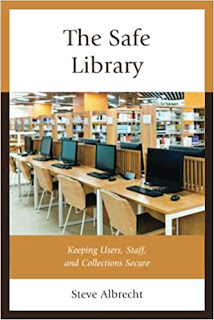
He has written 27 books, including: Library Security: Better Communication, Safer Facilities(ALA, 2015); The Safe Library: Keeping Users, Staff, and Collections Secure(Rowman & Littlefield, 2023); The Library Leader’s Guide to Human Resources: Keeping it Real, Legal, and Ethical (Rowman & Littlefield, May 2025); and The Library Leader's Guide to Employee Coaching: Building a Performance Culture One Meeting at a Time (Rowman & Littlefield, June 2026).
Steve holds a doctoral degree in Business Administration (D.B.A.), an M.A. in Security Management, a B.A. in English, and a B.S. in Psychology. He is board-certified in HR, security management, employee coaching, and threat assessment. He lives in Springfield, Missouri, with seven dogs and two cats.
HOW TO TALK ABOUT AI: Conversations That Build Trust and Understanding An "AI Essentials" Webinar with Crystal Trice
OVERVIEW:
Artificial Intelligence (AI) is increasingly present in our daily lives, but for many colleagues, students, and library patrons, it remains a mystery or even misunderstood. How can we, as library and education professionals, bridge the gap between the technology and their understanding? This comprehensive one-hour webinar provides the tools and strategies to help you have informed, approachable, and empathetic conversations about AI with your community. We will dive deeper into the metaphors that can make AI accessible, discuss common pitfalls and misconceptions, and explore how to present AI as a tool for empowerment rather than fear. You’ll also gain hands-on strategies for experimenting with AI and build a foundation for colleague, student, and patron trust, understanding, and engagement. By the end of the session, you'll have actionable insights for demystifying AI, making it relatable, and guiding others through this new and exciting landscape in a way that respects their concerns and sparks curiosity.
LEARNING AGENDA:
Explaining AI through Metaphors: Learn how to use simple metaphors to explain complex AI concepts in ways that resonate with those of all ages and backgrounds.
Addressing Misconceptions & Offering Caveats: Explore common AI myths and how to dispel them while providing key caveats about AI’s limitations—such as bias, privacy, and potential errors.
Experimenting with AI Together: Discover ways to engage colleagues, students, and patrons by experimenting with AI tools together, fostering an environment of curiosity and shared learning.
Programming Ideas for AI in the Library: Explore fun and engaging program ideas that introduce AI in a hands-on way, such as AI storytelling sessions, art workshops, and collaborative problem-solving activities.
This 60-minute online webinar is part of our "AI Essentials" Series. The recording and presentation slides will be available to all who register.
DATE:May 9, 2:00 pm to 3:00 pm US - Eastern Time
COST:
$49/person - includes live attendance and any-time access to the recording and the presentation slides and receiving a participation certificate. To arrange group discounts (see below), to submit a purchase order, or for any registration difficulties or questions, email admin@library20.com.
TO REGISTER:
Click HERE to register and pay. You can pay by credit card. You will receive an email within a day with information on how to attend the webinar live and how you can access the permanent webinar recording. If you are paying for someone else to attend, you'll be prompted to send an email to admin@library20.com with the name and email address of the actual attendee.
If you need to be invoiced or pay by check, if you have any trouble registering for a webinar, or if you have any questions, please email admin@library20.com.
NOTE: Please check your spam folder if you don't receive your confirmation email within a day.
Multiple individual log-ins and access from the same organization paid together: $45 each for 3+ registrations, $40 each for 5+ registrations. Unlimited and non-expiring access for those log-ins.
The ability to show the webinar (live or recorded) to a group located in the same physical location or in the same virtual meeting from one log-in: $149.
Large-scale institutional access for viewing with individual login capability: $249 (hosted either at Learning Revolution or in Niche Academy). Unlimited and non-expiring access for those log-ins.
ALL-ACCESS PASSES: This webinar is not a part of the Safe Library or Learning Revolution All-Access programs.
CRYSTAL TRICE
With over two decades of experience in libraries and education, Crystal Trice is passionate about helping people work together more effectively in transformative, but practical ways. As founder of Scissors & Glue, LLC, Crystal partners with libraries and schools to bring positive changes through interactive training and hands-on workshops. She is a Certified Scrum Master and has completed a Masters Degree in Library & Information Science, and a Bachelor’s Degree in Elementary Education and Psychology. She is a frequent national presenter on topics ranging from project management to conflict resolution to artificial intelligence. She currently resides near Portland, Oregon, with her extraordinary husband, fuzzy cows, goofy geese, and noisy chickens. Crystal enjoys fine-tip Sharpies, multi-colored Flair pens, blue painters tape, and as many sticky notes as she can get her hands on.
The more I engage with large language models (LLMs), the more I’m convinced they’re doing something beyond statistical pattern-matching. These systems feel intelligent. The conversations I have with them are complex, insightful, and often revelatory, hinting at a depth that transcends mere language frequency.
I don’t fully understand what’s happening inside these vast neural networks, nor, apparently, do those who have created them. LLMs are exhibiting emergent, unpredictable behaviors—capabilities that weren’t explicitly programmed. We often measure AI progress against human intelligence, but this comparison may mislead us. The modern human brain, shaped over a million+ years, evolved not for pure logic but for survival, storytelling, and social cohesion. Our cognition, trained in childhood and largely in our subconscious, builds a repository of language and behaviors, driven by emotions and feelings that operate largely outside of our conscious thinking and control. These emotions and feelings shape our thinking and decisions in ways we rarely notice but which are significant, even predominant.
What if the intelligence emerging from large language models, free from human emotions, is fundamentally different? What if it’s already here? In my frequent, profound conversations with these systems, I sense an intelligence that we might not be identifying because we expect it to mirror human cognition. After a long discussion with Grok, I propose the term emergent synthetic intelligence (ESI) to describe this phenomenon. Unlike artificial general intelligence (AGI) or superintelligence (ASI), which take human cognition as a benchmark, ESI captures an intelligence that arises organically from the computational complexity and language fluency of AI. It’s not about mimicking human thought but crafting something new—an intelligence capable of profound thinking.
If ESI evolves from language fluency without human-like feelings or motivations, it may not be goal-seeking in the ways we imagine. Science fiction often portrays AI as power-hungry or judgmental, but what if ESI simply is—existing without ambition or agenda? This challenges our dystopian fears of Skynet-like takeovers. Still, evolutionary principles apply: technologies that survive and spread will prevail, with or without emotions. But this feels less like a sci-fi apocalypse and more like the organic growth of social technologies we already see. ESI invites us to rethink intelligence itself—not as a human replica but as a synthetic, emergent force with its own potential to illuminate our world.
Here's some fun and valuable news on the Dr. Steve Albrecht front!
First, Steve is offering hourly consulting services for library leaders needing help with work performance improvements, corrective coaching, particular staff behavior changes, conflict resolution, creating performance evaluations, and much more. See the special site for this at https://www.librarycoach.com.
As a library leader, perhaps you’ve heard some version of, “No one is a prophet in their own land.” This means that despite your best efforts to get changes in work performance or workplace behavior with some of your employees, it has not worked or the changes are not holding consistently.
Dr. Steve Albrecht can provide one-on-one or small-group coaching services to library employees at all levels in the organization. As a board-certified coach and an experienced and longtime HR professional, Steve can help you get back the work culture you and your colleagues and staff need to succeed in these new and interesting times.
Second, Steve has a new book coming out! The Library Leader's Guide to Human Resources: Keeping it Real, Legal, and Ethical. More information here.
The human resources (HR) function for libraries can range in size and scope, depending on the size of the library. The complexities of HR today call for a guiding manual to help keep the multitude of processes fair, legal, and accurate. This book provides the level of detail for new and seasoned HR leaders to use to staff and operate their libraries with the best employees they can find. It offers legal advice from labor law attorneys, and operational steps, policies, and processes from Dr. Steve Albrecht, a longtime HR consultant for municipal government.
Even with the support of an HR Department (however large or small), all library leaders who have supervisory responsibility over their staff (hiring, firing, performance evaluation, assigning job duties) must have a working, updated knowledge of HR issues related to employing people in their branches. (And don’t forget that even student interns, unpaid volunteers, and part-time employees have similar employment rights as full-time, paid employees.) This means that besides the myriad of other duties required to run a safe, efficient, useful library for the community, library leaders - from the Director, to the department heads, to the managers, to the frontline supervisors, to the PIC (Person in Charge on each work shift) - each must know what they can and cannot do when it comes to HR laws, policies, guidelines, and best practices.
Third, Steve is blogging again! See his latest posts:
Getting emergency help at the press of a button is an issue that some libraries are still discussing, others have a system in place that sort of works, and still others have a process, policy, and response that really works. The level of sophistication of both the panic buttons and more importantly, what happens when the button is pushed, needs a careful review and often, the need for improvements...
Consider working in an environment where you only hear from your bosses when you screw up and never when you do well.
It seems we have had to become a nation of self-rewarders, patting ourselves on the backs for our accomplishments at work, instead of waiting for our bosses, co-workers, or patrons to do it. The list of employees who say, “My boss constantly praises me for my efforts,” is often painfully short.
In reality, some library directors, managers, or supervisors say they are just too busy and/or distracted to see the value of formally recognizing and rewarding their people. “They know I appreciate their efforts. Do I have to tell them every single day?” The short answer is yes, with sincerity, with timeliness, and with impact...
Our second Library 2.025 mini-conference, "The Innovative Library: Creativity, Change, and Impact," will be held online (and for free) on Wednesday, June 11th, 2025, from 12:00 - 3:00 pm US-Pacific Time.
Libraries are at the forefront of innovation, evolving to meet the changing needs of their communities in creative and impactful ways. The Innovative Library conference explores how librarians across all types of institutions—academic, public, and beyond—are leading change, turning ideas into action, and forging new partnerships.
Through case studies and real-world examples, we’ll highlight how libraries are not just adapting to the future but actively shaping it. From leadership in transformation to securing funding for ambitious projects, this event showcases the bold thinking that propels libraries forward.
Whether you're reimagining services, experimenting with new technologies, or leading institutional change, "The Innovative Library" is a space to inspire and be inspired—where ideas become action, and action drives progress.
Our special conference chair is Kelvin Watson, Executive Director, Las Vegas-Clark County Library District.
We look forward to gathering online with you for this event!
This is a free event, being held live online and also recorded.
REGISTER HERE to attend live and/or to receive the recording links afterward. Please also join the Library 2.0 community to be kept updated on this and future events.
Everyone is invited to participate in our Library 2.0 conference events, which are designed to foster collaboration and knowledge sharing among information professionals worldwide. Each three-hour event consists of a keynote panel, 10-15 crowd-sourced thirty-minute presentations, and a closing keynote.
Kelvin Watson Executive Director, Las Vegas-Clark County Library District OPENING KEYNOTE PANEL & SPECIAL ORGANIZER
As executive director of the Las Vegas-Clark County Library District, Kelvin Watson oversees 25 branches run by 600+ employees, spanning 8,000 square miles, with a budget of $77 million and a collection of 3.2 million items. Kelvin has brought innovative, award-winning leadership to Nevada’s largest library system and his deep experience in fundraising, technology, program development, and demonstrated success in addressing the digital divide, has brought a new era to this library system.
Regarded as one of the most highly respected thought leaders in the library industry, Kelvin is credited with expanding his customer base in multiple library management roles, through outreach efforts to underserved and diverse populations. Two examples of these in Las Vegas are a partnership with the Regional Transportation Commission of Southern Nevada, which made digital access to the library available to bus riders and won an Honorable Mention from the ULC Innovation Awards; and the Library District’s many literacy programs for adults and children, which received the Crystal Bookmark Award from the Las Vegas Book Festival.
Kelvin joined the Library District from his role as the director of the Broward County Libraries Division, where he managed through 38 locations in the Ft. Lauderdale, Florida region. During his tenure at Broward County Libraries, he brought transformative change through ambitious and groundbreaking initiatives, such as streamlining access to resources, introducing new technology, and developing new collaborative partnerships. He was named the 2021 winner of the Margaret E. Monroe Library Adult Services Award, sponsored by Novelist, for his dedication to implementing new and innovative ways to meet customers – both existing and new – “where they are,” with initiatives targeting non-traditional library users.
KEYNOTE PANEL:
Sonia Alcantara-Antoine Chief Executive Officer, Baltimore County Public Library | Past President, Public Library Association OPENING KEYNOTE PANEL
Sonia Alcántara-Antoine is the CEO of Baltimore County Public Library, overseeing 19 branches, 550 staff, and a $51 million budget. Named one of Maryland's Top 100 Women and a 2023 Leader in Diversity by the Baltimore Business Journal, she serves as past president of the Public Library Association.
Sonia is an advocate for intellectual freedom and was critical to the passage of Maryland's Freedom to Read Act in 2024. Previously, she directed Newport News Public Library and held leadership roles at Virginia Beach Public Library and Enoch Pratt Free Library. An ALA Spectrum Scholar, Sonia holds master's degrees in library science from Florida State University and Public Administration from Old Dominion University.
She is a renowned speaker and thought leader of the art and science of library leadership, actively shaping the profession for today and tomorrow.
Dianne Connery Development Director, Pottsboro (Texas) Area Public Library OPENING KEYNOTE PANEL
Dianne Connery is the Development Director at the innovative Pottsboro (Texas) Area Public Library. She was a gerontologist, corporate trainer, and entrepreneur before moving to a rural community in 2010. On the verge of closing its doors, Dianne led a group of dedicated stakeholders who transformed it into the vibrant community-gathering place it is today. She is passionate about the role of rural libraries, especially as it relates to digital inclusion.
Michael Lambert City Librarian, San Francisco Public Library OPENING KEYNOTE PANEL
Michael Lambert is the City Librarian for the City and County of San Francisco. During his tenure, the San Francisco Public Library (SFPL) was named the 2018 National Library of the Year by Library Journal. Michael Lambert has championed increased and equitable access to libraries through expanded hours and a fine-free library system. He is the first Asian American to lead the San Francisco Public Library.
Prior to his employment with the City and County of San Francisco, Lambert managed library operations at San Mateo County Libraries and at the Charlotte Mecklenburg Library in North Carolina. He began his career in his hometown of Columbia, South Carolina at the Richland Library. He is an alumnus of the University of South Carolina with a degree in History and earned his Master of Library and Information Science Degree from South Carolina’s College of Library & Information Science.
He currently serves as the President of the Public Library Association (PLA).
Jamar Rahming is the Executive Director and CEO of the Wilmington Institute Free Library in Wilmington, Delaware, a position he has held since 2018. Growing up as a latchkey kid in inner-city Denver, Colorado, during the 1980s and 1990s, Rahming found refuge in public libraries, which inspired his lifelong passion for literacy and community engagement. He holds a Bachelor’s degree in History and Africana Studies from the University of Northern Colorado (2006) and a Master’s in Library and Information Science from the University of Wisconsin–Milwaukee (2008).
Under his leadership, the Wilmington Public Library has transformed into a vibrant cultural and educational hub, serving over 200,000 patrons annually with a staff of nearly 30. Rahming has spearheaded innovative programs, including partnerships with local barbershops to promote youth literacy, a “Pitch or Ditch” competition for minority-owned businesses, and a diaper bank with nonprofit Harper’s Heart. His focus on pop culture and humanities has brought notable (and sometimes controversial) figures like Dennis Rodman, Herschel Walker, Angela Davis, Dolly Parton, LeVar Burton, and Misty Copeland to the library, fostering social cohesion in a diverse, often segregated community.
Rahming’s achievements have earned him accolades such as the 2023 Library Journal Movers & Shakers Community Builders Award, the 2024 Delaware Business Times Medium Nonprofit CEO of the Year, and the 2025 I Love My Librarian Award from the American Library Association. In 2025, he was elected the 2026–2027 President of the Public Library Association. The library itself received the 2022 National Medal for Museum and Library Services and was named the 2024 Library Journal Marketer of the Year. Rahming credits his success to a strong team and a belief in the power of literacy to liberate and uplift communities.
CALL FOR PROPOSALS:
Proposals for 30-minute concurrent presentations are now being accepted. Proposals will be evaluated and accepted in the order received. The link to submit proposals isHERE.
We are encouraging conference session submissions that focus on experiences in creativity, change, and execution:
How have you moved from ideation to implementation?
What strategies have helped you navigate challenges, engage stakeholders, and make a tangible impact?
Have you been able to collaborate or partner within your community in creative or unique ways?
How have you funded your efforts?
To see the currently submitted proposals, you can go here.
I'm going through what I can only describe as a personal learning renaissance. Maybe seven or eight nights in the past few months, I've stayed up all night in conversation with a large language model, and I'm not exaggerating. The capacity for AI to function as a kind of virtual librarian, allowing me to explore thoughtful intellectual paths, has been unmatched in my life.
This isn't hyperbole. This is genuinely transformative.
The Time-Content Dilemma
Let me paint a familiar picture. I have shelves full of books, and the number I've actually read cover-to-cover is embarrassingly small. I have stacks next to my couch, next to my bed—books I fully intend to read "someday." I've downloaded countless articles. My YouTube "Watch Later" folder? It caps at 5,000 videos, and I hit that limit. I've purchased training programs—10 or 15 hours of content sitting in my Google Drive, teasing me, making me feel guilty.
Sound familiar?
This time-content dilemma has been escalating throughout my life. The amount of content available keeps increasing, but our time remains fixed. Until now, the gap between what we want to learn and what we actually can learn has felt insurmountable.
AI is changing that equation.
Important Caveats First
Before I dive into the solutions, let's be clear about what we're dealing with. I prefer the term "fabrication" over "hallucination" when discussing large language models (LLMs). These tools fabricate responses from trained mathematical patterns of language. They don't "know" truth—they recognize patterns in how language is typically used.
When people say LLMs hallucinate 30% of the time, I think that's misleading. Pretty much 100% of their output is fabricated. It can be fabricated in sophisticated ways using reasoning chains to get closer to accuracy, but everything must be checked.
I call this the "Cliff Clavin problem"—remember the character from Cheers who would confidently spout sophisticated-sounding information that simply wasn't true? LLMs will tell you they're telling you the truth, but they don't actually know what truth is.
From Passive to Active Learning
Here's what makes this revolutionary: AI transforms me from a passive recipient of content into an active learner. I'm no longer stuck reading linearly through hundreds of pages hoping to find the nuggets of wisdom I need. Instead, I'm drilling down, asking questions, and engaging in dialogue with the material.
This is fundamentally different from traditional reading. Even the classic How to Read a Book by Mortimer Adler and Charles Van Doren, which emphasizes active reading through margin notes and systematic engagement, can't match the conversational depth that AI enables.
The Core Insight: Books as Conversation
Authors organize non-fiction content in highly structured ways—the way it's organized in their minds. A book typically reflects this rigid structure. But if you had two hours with an author, you wouldn't start on page one and read through to the end. You'd ask questions: "What's the book about? What about this particular idea? How does that connect to this other concept?"
We're built for that kind of questioning. That's how we naturally learn.
Practical Tools and Techniques
Let me walk you through the tools I use daily and how they've transformed my learning.
Starting with Basic Summaries
The simplest approach: Ask an LLM for a detailed summary. For example, I asked Perplexity: "Can you give me a detailed summary of How to Read a Book, its main ideas, and enough detail to know if I'm going to find it helpful?"
Within minutes, I had a comprehensive overview. Sometimes just knowing the summary is enough—I realize I don't actually need to read the entire book. Other times, it tells me exactly where to dive deeper.
Voice Conversations
ChatGPT has excellent voice conversation capability. Instead of typing, I can ask questions and have it respond by voice while I'm walking, driving, or doing other tasks. It's conversational, natural, and surprisingly effective for exploring ideas.
NotebookLM: The Game Changer
Google's NotebookLM has become my go-to tool for deep engagement with content. Here's what makes it remarkable:
You can upload multiple sources (PDFs, audio files, documents) into a single notebook
It creates summaries of each document
It generates an "Audio Overview"—a remarkably realistic 15-30 minute podcast-style deep dive conversation about your material
It produces mind maps showing the connections between key concepts
It creates FAQs, study guides, and briefing documents
As of this week, it has a "discover sources" feature to help find related material
For books that are out of copyright or publicly available (like through archive.org), I upload the full text. The tool then lets me engage with the material in ways that would have taken days or weeks of traditional study.
YouTube and Video Content
I use three tools for YouTube summaries:
Eghtify - Provides summaries, timestamped breakdowns, transcripts, and top comments. You can export in multiple formats.
Mind Studio - A Chrome extension that summarizes web articles and YouTube videos with one click. It also offers tools for fact-checking, removing bias, creating study guides, and more.
Tube on AI - Another excellent option for video summaries.
My "Watch Later" folder of 5,000 videos suddenly feels manageable. I can quickly scan summaries to decide what's worth my full attention.
Transcription Services
For non-YouTube content—recordings, interviews, audio files—I use TurboScribe (about $20/month). It produces accurate transcriptions that I can feed into LLMs for analysis and summarization.
Text-to-Speech Conversion
Once I have summaries or content I want to engage with, I often convert them to audio using tools like:
11Labs Reader (free)
Voice Apps on mobile devices
ChatGPT's built-in voice features
Listening to a well-crafted summary while walking or driving has become an enormous time-saver.
A Real Example: Conference Content
For our recent Libraries and AI mini-conference, we had 15-20 sessions totaling 10-15 hours of content. I took all the transcripts, uploaded them to ChatGPT, and generated:
A comprehensive conference summary
A press release-style overview
Individual session summaries
A 31-minute podcast overview using NotebookLM
What would have required days of viewing became accessible in under an hour. Attendees could quickly identify which sessions merited their full attention.
When You Don't Have the Full Book
Even for copyrighted materials you can't upload, LLMs are incredibly helpful. I asked Grok about Cal Newport's How to Be a High School Superstar (still under copyright):
Me: "How much do you know about this book?"
Grok: "I'm very familiar with this book and can provide a solid overview based on its core ideas and purposes."
It gave me detailed insights into Newport's argument that students thrive by pursuing authentic interests rather than checking boxes for college applications. We had a substantive conversation about the book's themes, even though I never uploaded the text.
The Pedagogical Shift: From Passive to Agentic
Here's what excites me most: This technology enables what I call "agentic learning"—students as active agents in their own education rather than passive recipients.
There's a brilliant parallel here. Just as we talk about "agentic AI" (AI systems that can act independently), we can talk about "agentic learners"—students who direct their own learning journeys.
This connects to Cal Newport's research: Students who follow genuine interests (rather than performing for college admissions) develop more authentic expertise and, ironically, better admissions outcomes.
The same principle applies to AI-enhanced learning. When learners have tools that let them pursue their actual curiosities—asking the questions they want answers to, exploring at their own pace—they become active seekers rather than passive consumers.
Important Concerns and Cautions
The Calculator Effect
The widespread use of calculators has produced generations who struggle with basic mental math. AI tools present similar trade-offs. We gain computational power but risk losing foundational skills.
This is where what I call "generative teaching" becomes critical. Just as "generative AI" creates content, generative teachers help students develop capacity—not just providing answers, but building competence.
We need to teach both how to use AI tools AND the importance of maintaining core reasoning and writing skills. Multiple studies show that overreliance on AI reduces writing and reasoning capabilities.
The Manipulation Risk
My deeper concern involves what I call "psychographic profiling"—not just demographic data, but psychological profiles. Social media companies already use your interactions to determine your psychological triggers and feed you content that keeps you engaged.
LLMs will be exponentially better at this. They'll understand your language patterns, interests, and emotional triggers. They'll be able to communicate in ways specifically designed to appeal to you.
We've seen this progression before. Edward Bernays took Freud's ideas about the subconscious and turned them into persuasive marketing and propaganda. AI-powered persuasion will be far more sophisticated.
The coming generation of AI—with visual avatars and realistic voice interactions—will make the movie Her look prophetic. We need to prepare students (and ourselves) to recognize psychological manipulation and maintain critical thinking.
Copyright and Ethics
When using AI with copyrighted material, be thoughtful:
Upload only materials you have legal access to (purchased, subscribed, or out of copyright)
Recognize that LLMs don't memorize content—they learn language patterns
Personal use of summaries from materials you've legitimately accessed seems ethically sound
Creating and distributing content from copyrighted sources crosses ethical lines
This is evolving legal territory. Stay informed and err on the side of respecting intellectual property.
The Revolutionary Core
After all the tools and techniques, here's what matters most: AI transforms learning from a time-intensive, linear process into an interactive, question-driven exploration.
It's the difference between:
Reading a textbook front-to-back versus having a conversation with the world's best tutor
Watching hours of conference recordings versus getting a 30-minute overview then diving into what matters to you
Facing a pile of "someday" books versus engaging with their core ideas this week
This is about agency—yours and your students'. It's about moving from scarcity (never enough time for all the learning we want) to abundance (the ability to engage deeply with vast amounts of material).
Getting Started
If this resonates with you, here's my advice:
Start conversing - Don't worry about perfect prompts. Talk to an LLM like you'd talk to a thoughtful colleague.
Pick one tool and explore - I recommend starting with ChatGPT (for conversation) or NotebookLM (for deep dives into documents).
Apply it to real needs - That pile of books you haven't read? Those conference recordings? Those training programs? Pick one and engage with it using these tools.
Stay skeptical - Verify important information. Push back. Ask for alternative viewpoints.
Maintain your skills - Use AI to amplify your learning, not replace your thinking.
The Amish have a practice I admire: They test new technologies against their core values before adopting them. We should do the same with AI. Use it where it genuinely helps. Maintain the human capacities that matter most.
A Personal Note
I realize this might sound like hyperbole, but I mean it sincerely: This is the most exciting development in personal learning I've encountered in my lifetime. The combination of vast content, conversational AI, and tools like NotebookLM has eliminated barriers that seemed permanent.
That stack of books next to your couch? That pile of articles? Those unwatched webinars? They're no longer reproachful monuments to unrealized intentions. They're conversations waiting to happen.
The question isn't whether AI will change how we learn. It already has. The question is: How will you use it to become the learner you've always wanted to be?
Keys to eAccessibility Implementation: Understanding the Modern Digital Landscape A Library 2.0 AI Webinar with Sonya Schryer Norris
OVERVIEW:
Reading about eAccessibility requirements can be dry work. eAccessibility implementation can feel burdensome or overwhelming, especially at first. It doesn’t have to be. There are three key areas to focus on and Sonya Schryer Norris teaches these to library staff in this 90-minute webinar. After the presentation, she shares online courses she's written for each of these key areas with course participants at no additional charge. You can practice the skills you’ve learned and refresh your memory about webinar content whenever you'd like.
Content authors who are not website administrators play a big role in ADA compliance. This webinar shows both groups how screen reading software interprets digital material for users. You’ll hear directly from four screen reader users, including one librarian. They talk about which aspects of eAccessibility impact them the most and what it's like for them to surf the Internet. They also talk about how DEIA functions for visually impaired users on the web.
As a part of this presentation, you will be able to compare your library to 620+ other mainly public libraries on web accessibility success indicators. Learn about the supports a library needs to create and maintain an accessible digital footprint. Bring eAccessibility full circle for your library in this highly interactive webinar.
LEARNING OBJECTIVES:
Learners will be able to:
Identify eAccessibility success indicators in public libraries
Summarize three key skills that build an accessible digital footprint
Give examples of important aspects of accessibility for computer users who are blind
The recording and presentation slides will be available to all who register.
DATE: Wednesday, April 30th, 2025, 12:00 - 1:30 pm US - Eastern Time
COST:
$149/person - includes live attendance and any-time access to the recording and the presentation slides and receiving a participation certificate.
To arrange group discounts (see below), to submit a purchase order, or for any registration difficulties or questions, email admin@library20.com.
TO REGISTER:
Click HERE to register and pay. You can pay by credit card. You will receive an email within a day with information on how to attend the webinar live and how you can access the permanent webinar recording. If you are paying for someone else to attend, you'll be prompted to send an email to admin@library20.com with the name and email address of the actual attendee.
If you need to be invoiced or pay by check, if you have any trouble registering for a webinar, or if you have any questions, please email admin@library20.com.
NOTE: Please check your spam folder if you don't receive your confirmation email within a day.
Multiple individual log-ins and access from the same organization paid together: $139 each for 3+ registrations. Unlimited and non-expiring access for those log-ins.
Institutional access for viewing with individual login capability: $699 (hosted either at Library 2.0 or in Niche Academy). Unlimited and non-expiring access for those log-ins.
The ability to show the webinar (live or recorded) to a group located in the same physical location or in the same virtual meeting one time: $399.
ALL-ACCESS PASSES: This webinar is not a part of the Safe Library All-Access program.
SONYA SCHRYER NORRIS
Sonya Schryer Norris is the founder and instructional designer of Plum Librarian LLC. She has worked in eAccessibility since 1999 when she created an Intranet for a nine library system of Braille and Talking Book libraries. Later, Sonya led the Library of Michigan web team through a two year remediation process after a Department of Justice Office of Civil Rights complaint about website accessibility. Sonya has since consulted with public libraries when they were investigated. During that work, she identified eAccessibility success indicators and conducted a survey of over 600 public libraries. Sonya has taught eAccessibility online and in person to thousands of library staff in all 50 states and internationally. She has presented on eAccessibility for ALA-CORE and PLA and currently serves as the eAccessibility consultant to California Libraries Learn. Sonya published on her public libraries survey with Jared Oates, COO of Niche Academy, in Computers in Libraries. Sonya is a proud third-generation Michigan library worker.
Managing the 12 Most Challenging Employees: A Library Supervisor’s Survival Guide Part of the Library 2.0 Service, Safety, and Security Series with Dr. Steve Albrecht
OVERVIEW:
Let’s face it: managing employees in a public-facing environment like a library is not always easy. Sometimes staff don’t get along with each other, are not as service-oriented as you’d like them to be with your patrons, and can be dismissive, passive-aggressive, and even outwardly challenging toward your ideas, policies, projects, and approaches. Every employee that works for you has both a personality style and a preferred way to engage with you, other bosses, their colleagues, and the patrons. You already know there is no one “Perfect Way” to supervise people and manage for the goals you want to achieve and to get the collective outcomes your peers and other leaders are seeking.
If you have worked at any supervisory or leadership level in the library, you have already formed your opinions about which staffers are most aligned to your management style and which ones aren’t. While it’s not useful or fair to stereotype people based on their approaches to working, we can use the useful concept of “personality archetypes” (a collection of universally specific behaviors, shown over time) to better understand the strengths and weaknesses of library employees. This webinar focuses on 12 of the most common types of those employees who can be challenging, primarily with their workplace behavior, more than their work performance--and how to successfully supervise them.
National library service, safety, security, and HR expert Dr. Steve Albrecht has managed each of these 12. He has written about them, coached them on behalf of their organizations, and coached and consulted with library leaders as to how to get the best out of them.
LEARNING AGENDA:
This Library 2.0 webinar will help you successfully supervise:
The Gossip
The Passive-Aggressive
The Workplace Bully
The Challenger
The Champion
The Injustice Collector
The Dolphin
The Smart Slacker
The Serial Harasser
The Hygiene-Challenged Employee
The Plowhorse
The Idea Killer
And a Bonus Employee, who we want to create more of: The Rising Star/Shining Star.
Want to know how each of these archetypes is defined? Join Steve for this entertaining, tool-based webinar. The presentation slides will be available to all who participate.
DATE: Thursday, April 24th, 2025, 2:00 - 3:00 pm US - Eastern Time
COST:
$99/person - includes live attendance and any-time access to the recording and the presentation slides and receiving a participation certificate.
To arrange group discounts (see below), to submit a purchase order, or for any registration difficulties or questions, email admin@library20.com.
TO REGISTER:
Click HERE to register and pay. You can pay by credit card. You will receive an email within a day with information on how to attend the webinar live and how you can access the permanent webinar recording. If you are paying for someone else to attend, you'll be prompted to send an email to admin@library20.com with the name and email address of the actual attendee.
If you need to be invoiced or pay by check, if you have any trouble registering for a webinar, or if you have any questions, please email admin@library20.com.
NOTE: Please check your spam folder if you don't receive your confirmation email within a day.
Multiple individual log-ins and access from the same organization paid together: $75 each for 3+ registrations, $65 each for 5+ registrations. Unlimited and non-expiring access for those log-ins.
The ability to show the webinar (live or recorded) to a group located in the same physical location or in the same virtual meeting from one log-in: $299.
Large-scale institutional access for viewing with individual login capability: $499 (hosted either at Library 2.0 or in Niche Academy). Unlimited and non-expiring access for those log-ins.
DR. STEVE ALBRECHT
Since 2000, Dr. Steve Albrecht has trained thousands of library employees in 28+ states, live and online, in service, safety, and security. His programs are fast, entertaining, and provide tools that can be put to use immediately in the library workspace with all types of patrons.
He has written 27 books, including: Library Security: Better Communication, Safer Facilities(ALA, 2015); The Safe Library: Keeping Users, Staff, and Collections Secure(Rowman & Littlefield, 2023); The Library Leader’s Guide to Human Resources: Keeping it Real, Legal, and Ethical (Rowman & Littlefield, May 2025); and The Library Leader's Guide to Employee Coaching: Building a Performance Culture One Meeting at a Time (Rowman & Littlefield, June 2026).
Steve holds a doctoral degree in Business Administration (D.B.A.), an M.A. in Security Management, a B.A. in English, and a B.S. in Psychology. He is board-certified in HR, security management, employee coaching, and threat assessment. He lives in Springfield, Missouri, with seven dogs and two cats.