Friday, April 13, 2007

Amazing, Amazing Use of an Old Computer

I'm having an incredible brainstorm about used computers and homeless shelters, emergency shelters, low-income housing units, schools, etc.

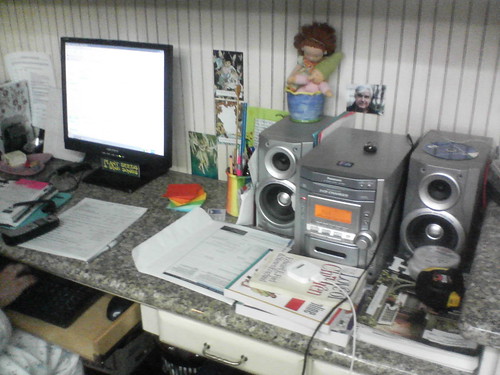
This is our kitchen computer. Actually, it's just the monitor and our small stereo. The computer is below, and pictured below. The computer is an old Dell GX240, rather beaten up, with a 4GB (that's right, only 4GB, not the original) drive, 256MB of memory, CD drive, but no floppy or usable Windows license. Probably worth well under $100; I'm imagining this would work easily on pretty much on most P3s.
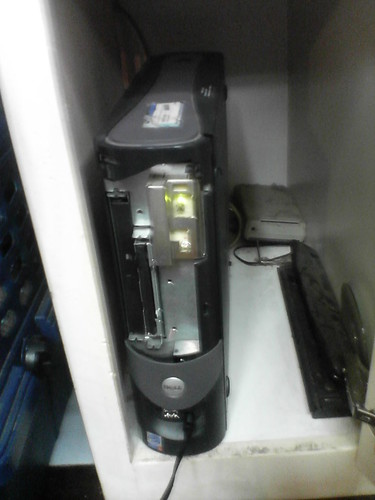
I'm running Puppy Linux on it, a Linux operating system which runs from the CD-Rom drive, and weighs in at around 50MB. You read that right. I downloaded a version of Firefox 2.0-something, Flash 9 for Linux, and then Skype and Gizmo. Now the operating system and programs are still less than 150MB. Puppy then saves the configuration and data files on the small hard drive. If I were more of an expert in Puppy, I could do away with the CD-Rom and have it boot from the hard drive.

This is our main family computer. Here's what it can now do:

1. Anything Firefox. Great YouTube/Google/etc. video playback, perfectly synchronized (not sure I feel confident about Puppy's use of the codecs, but still have to research that). Puppy has good word processing, spreadsheet, and other programs, but truth be told, I now live almost entirely on the web. To have Firefox 2.0+ on an old computer, where the operating system takes almost no overhead, is like working on a P4.

2. Skype and Gizmo phone calls. I plugged in a headset/mic combo tonight and made phone calls. OMIGOSH. OK, can we talk about emergency relief efforts? Deploying old computers in disaster shelters where people will instantly have access to both the web and calling?

3. I've tested Puppy on my recently-purchased Toshiba laptop, and the wireless drivers work great, so it can do wireless. Municipal free wi-fi efforts, here you go. Get computers and Internet access into the hands of those who need them the most.

4. We've even uploaded our family CD-music collection to MP3Tunes, and we now listen to them, or to Pandora, directly out of our stereo thanks to a cable from the computer to the stereo auxiliary jacks. OK, that's a luxury, but it's pretty amazing to have all of our music (thousands of songs) stored on the web for free and to have an old computer acting as the control-panel from a web page.

Here's the deal. Over 100,000 computers are discarded in this country every day. Estimates are that less than 5% get re-used. The major manufacturers have recycling programs, but you have to know that recycling is not re-use, and recycling a computer gets very, very little back in terms of raw materials. Re-use is SIGNIFICANTLY better for the environment. Recycling is just politics. Here are the stats from Jim Lynch today announcing an EPA calculator for computer reuse:

====

Reusing just one computer with a CRT monitor saves:

30 lbs of hazardous waste
77 lbs of solid waste
77 lbs of materials
147 lbs (17.5 gallons) of water from being polluted
32 tons of air from being polluted
1,333 lbs of CO2 from being emitted
7,719 kilowatts of energy

This is equivalent to taking ½ of a car off the road, saving 68% of one US household's allotment of electricity for a year, and a net cost savings of $670.

====

If that's not incredibly compelling, I don't know what is. We don't re-use computers 1) because the marketing tells us we need to upgrade, 2) we can't legally re-use Microsoft Windows without the original CD and manual, 3) maintaining old versions of Windows is not viable or cost-effective, and 4) computers keep costing less and less. If Firefox is really the new platform of computing (and in many ways it is), and if a Linux distribution like Puppy can run the newest version, and if the use of the Internet is significant to the ability of individuals to communicate and participate in society, then we have a really compelling model for making a huge difference to those in our society who are least likely to have had access to computing before.

And think about schools. Just think about it. Hmmm... basic, stable computing at under $100 per computer. Maybe way under.

So what is it going to take to make this a reality? Well, it won't be the commercial market, because there is no money in it. It's going to take committed individuals and some kind of sponsorship. But it can be done.

Tuesday, April 10, 2007

Where Is the Technology Revolution in Education? (School 2.0, Part 10)

Yesterday I recorded this audio interview with Michael Russell of Boston College, whom I had recently heard speak at the COSN's 12th Annual K-12 School Networking Conference on the topic of "Where Is the Technology Revolution in Education?"

I was captivated by his talk, and quickly arranged an interview with him. You'll notice that I organized the interview in slightly different order than his presentation (a .pdf version of which is available here)--while Michael started his presentation by talking about the ways in which technology has transformed business, I wanted to jump right into the discussion of educational technology and the history of education, then to look at the business examples. Even though I think Michael has some very interesting things to say about trends in business technology that are likely to be played out in education, I prefer to downplay that concept a little because I'm not sure that business examples are always the best ones to trot out for education (although, to Michaels great credit, I think he's largely on the mark).

Here is Michael's COSN conference description of his original presentation (my notes on our interview follow):

----
Where is the Technology Revolution in Education? Essential Skills: Leadership and Vision, Education and Training

Computer-based technologies have revolutionized business, politics, and entertainment. They have allowed businesses such as Amazon.com and Netflix to dramatically expand the range of products from which they generate profits by creating large niche markets. Political candidates employ tactics that profile and target customized messages to potential voters. Children and young adults are no longer dependent on broadcast networks and movie houses for entertainment, but instead instantly access media and games that spark their current interests. Yet, despite dramatic increases in the presence of computers in our schools and repeated efforts to increase use of technology by students and teachers, education has been largely unaffected by computer-based technologies. Students rarely use computers in schools and they have little choice in what and when they learn. Most teachers still stand and deliver a curriculum that is imposed from above. And the predominant model of education is nearly identical to that introduced over a century ago. Why is this? This presentation explores the many impediments that have limited the use of technology in today’s schools. We see how access, leadership, support, and test-based accountability impact the ways in which technology is used by teachers and students. Learning from lessons in business, politics and the entertainment industry, we also explore how computer-based technologies might support dramatic changes in how education occurs if we are willing to move away from the paradigm of schooling adopted a century ago. These changes include targeting learning so that it is aligned with the interests and needs of students, creating networks of learners instead of classrooms of students, and integrating what is currently separate fields of studies.

----

I used the outline below to organized the topics in my own way to prepare for the interview. Of course, I didn't hit all of the points, but Michael does a great job of exploring the concepts that we did touch on.

Introduction:
I. What Is the Problem?
  • We've spent a lot of money on computers, the ratio of computer to students is higher than it's ever been, schools are more connected to the Internet than ever before. Why is there a problem?
    • Where Is "Engaged Learning" actually taking place?
      • Are kids learning more outside of school than in school?
      • Are their learning environments more compelling outside of school?
      • Has school changed, or just what we are comparing it to?
    • What are computers actually used for in schools?
      • Are they just "expensive pencils?"
      • Are they not integrated enough?
      • What about 1:1 programs?
      • How ubiquitous do computers need to be for transformation to take place?
    • Is the cost of computing in schools too high?
      • If we've spent so much money, why aren't we seeing results?
        • Have we actually spent that much money?
          • What percent of school budgets actually goes to technology? (Is 3% correct?)
        • Spending money doesn't necessarily equate to student time on computers (Indiana)
        • Is there too much of a separation of purchasing/maintaining roles from teachers and classroom?
      • Are we just waiting for the "lag-time effect?" (infrastructure built out, then some years later innovation takes place--computers, data examples)
      • There are inexpensive alternatives for computing. Why aren't we using them? (Linux and Open Source Software)
    • What can we expect of teachers?
      • Younger teachers were supposed to bring the technology with them
        • They use these tools even less in the classroom than their older peers?
      • How do we help teachers understand the potential
        • Help them to learn to use the tools themselves?
        • Recognize the need for time
        • Recognize the need for training
II. Why Is the History of Education Important to This Discussion?
  • What are the paradigms of schooling that have been adopted in this country?
    • Charity Schools, Common Schools, and Cubberley on schools as factories.
      • Schools as “factories in which the raw materials (children) are to be shaped and fashioned into products to meet the various demands of life”
    • If we could all afford private tutors, would we sit at desks in rows, have bells, and learn the same things at the same time?
    • Is there any truth to John Taylor Gatto's themes of social control?
  • How could computer-based technologies open the door to changes?
    • What kind of resistance will there be?
    • Where is change taking place?
III. How have computers revolutionized business?
  • Can we look to any of the business changes for a model of possible ways they will affect education?
  • Can education respond as the business world does, or is education too much of a "machine" that "chews up and spits out innovation?"
  • What examples are there now of "transformed education?" (Gibson quote: the future is here, it's just not widely distributed.)
IV. What are the potentials for the use of Web 2.0 in the classroom?


Listen to the the Interview in MP3 format
Listen to the Interview in Vorbis OGG format

Subscribe to this AudioCast: